Reviving Traditional Wisdom to Save Ghana’s Forests: Former Deputy Minister Urges Chiefs to Lead Conservation Education
In a passionate call to action, the (former) Deputy Minister of Lands and Forestry, Miss Barbara Serwaa Asamoah, has urged traditional leaders across Ghana to play a critical role in educating the younger generation on the importance of preserving forests using age-old cultural practices. Speaking at the Eastern Regional launch of the Ghana Forest and Wildlife Policy in Koforidua, Miss Asamoah emphasized the need to integrate indigenous knowledge into modern conservation efforts.
Highlighting the growing disconnect between youth and traditional ecological values, the Deputy Minister lamented how modern technology and changing lifestyles have led to the neglect of sacred environmental customs. “In our formative years, we were told certain trees were not to be touched—that cutting them down brought consequences,” she recalled. “Today, curiosity and disregard have led to their destruction without hesitation.”
She stressed that these long-standing beliefs once played a vital role in conserving biodiversity and forest cover and should not be dismissed as mere folklore. Instead, they should be seen as part of Ghana’s cultural heritage and an asset in the fight against environmental degradation.
The occasion also marked the promotion of the revised Forest and Wildlife Policy, first updated in 2012 to replace the 1994 version. According to Miss Asamoah, the original 1994 policy brought important reforms, such as better governance, transparency, and a focus on poverty alleviation within forest management. However, nearly two decades later, Ghana’s forests are still under severe pressure, with timber and non-timber resources diminishing rapidly.
Unlike its predecessor, the 2012 policy reflects a more holistic approach. It moves away from focusing solely on timber production and instead prioritizes biodiversity conservation, ecosystem services, and eco-tourism. “The goal now is not just to protect trees but to promote sustainable development and livelihoods,” she noted.
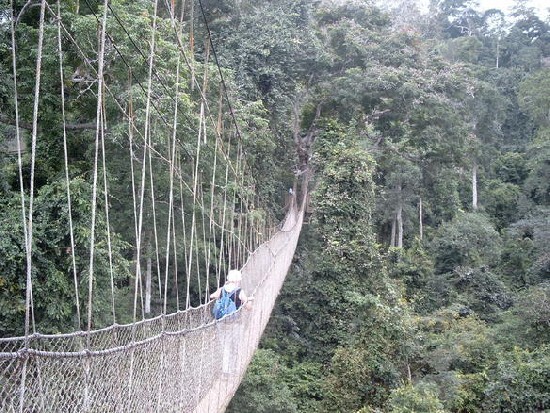
Miss Asamoah spotlighted Ghana’s rich natural heritage and its promise as an eco-tourism destination. “Forests like Atiwa, Kakum National Park, Achimota Forest, and Mole National Park are prime examples of areas that can generate sustainable economic value through eco-tourism,” she stated. Promoting tourism in these areas not only generates revenue but also encourages the public to value and protect these natural treasures.
She added that the new policy outlines practical strategies for better forest governance and calls on resource managers and all stakeholders to take decisive action. A Forestry Development Master Plan will soon be created to guide the implementation of the new policy across all regions.
Also speaking at the event, the Deputy Eastern Regional Minister, Miss Mavis Ama Frimpong, expressed optimism that the new policy would help reverse the alarming rate of forest and environmental degradation in the region. She echoed the importance of collective effort—from government and traditional authorities to local communities and the private sector.
In closing, Miss Asamoah reiterated that Ghana’s forest future depends not only on legislation but also on cultural values, community involvement, and a shared commitment to sustainability. “The forests are not just resources—they are living systems that support our very existence. It’s time we all treat them with the respect they deserve,” she concluded.
Why This Matters
Ghana’s forests are rapidly depleting due to illegal logging, mining, and agricultural expansion. With biodiversity under threat and climate change worsening, integrating traditional knowledge with modern policy frameworks may be the key to saving the country’s natural heritage for generations to come. Chiefs, elders, and community leaders can be powerful ambassadors in this mission—reviving cultural respect for nature in a modern context.